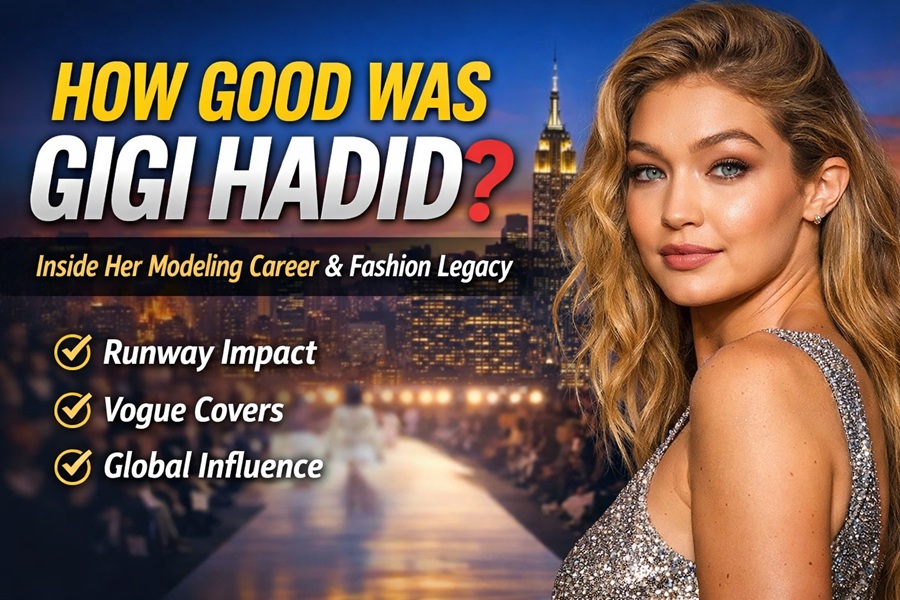
In the world of modern fashion, few names have achieved the level of recognition and influence that Gigi Hadid has. More than just a runway star or social media favorite, Gigi represents a shift in how models are discovered, marketed, and celebrated in the 21st century. But beyond the fame, the followers, and the headlines, a key question remains: How good was Gigi Hadid as a model—and what makes her truly exceptional?
To answer that, we must look beyond surface-level popularity and examine her skills, versatility, influence, and long-term impact on the fashion industry
Early Beginnings and Rise to Fame
Gigi Hadid, born Jelena Noura Hadid in 1995, was introduced to modeling at a very young age. However, her true breakthrough came in the early 2010s when she signed with IMG Models. While many initially labeled her as a “celebrity model” due to her famous family background, Gigi quickly proved she was far more than that.
Her rise was rapid but not effortless. She transitioned from commercial modeling into high fashion—an area that demands discipline, adaptability, and a strong runway presence. Within a few years, she was walking for major fashion houses such as Versace, Chanel, Marc Jacobs, Tommy Hilfiger, and Prada, an achievement few models reach so quickly.
Runway Presence and Professional Skill
One of the strongest indicators of Gigi Hadid’s modeling ability is her runway consistency. While critics initially questioned her walk, Gigi refined her technique season after season. She developed a confident, controlled stride that matched both high-fashion couture and commercial runway requirements.
What made her particularly effective was her ability to adapt to different brand identities. Whether walking for edgy designers, luxury brands, or mainstream fashion houses, she could modify her energy, expressions, and posture accordingly. This flexibility made her a favorite during major fashion weeks in New York, Paris, Milan, and London.
Runway modeling is physically and mentally demanding, and Gigi’s endurance—often walking in dozens of shows per season—highlighted her professionalism and commitment.
Editorial Versatility and Camera Presence
Where Gigi truly excelled was in front of the camera. She possessed a rare combination of classic beauty and contemporary edge, allowing her to thrive in editorial shoots. From high-glam fashion editorials to relaxed lifestyle spreads, she could transform effortlessly.
Her work with Vogue (US, UK, Paris, and international editions), Harper’s Bazaar, Elle, and W Magazine showcased her ability to tell a story through still images. Unlike many models who rely on one signature look, Gigi demonstrated emotional range—strong, soft, playful, serious, and powerful—often within the same shoot.
This adaptability made her one of the most sought-after editorial models of her generation.
Commercial Success and Brand Power
Beyond artistic modeling, Gigi Hadid became a commercial powerhouse. She was the face of major campaigns for Tommy Hilfiger, Maybelline, Versace, Reebok, and BMW, among others. Her collaborations, especially with Tommy Hilfiger, blurred the line between model and creative partner, signaling a new era where models became brand influencers and collaborators.
Her ability to connect with audiences made her extremely valuable to brands. She appealed not only to fashion insiders but also to younger consumers who followed her through social media. This crossover success is a significant measure of how “good” she was—not just artistically, but strategically.
Cultural Influence and Social Media Era
Gigi Hadid emerged at a time when fashion was evolving rapidly due to social media. Rather than resisting this shift, she embraced it responsibly. Her online presence felt approachable, authentic, and human—qualities that resonated with millions.
She helped redefine what a supermodel looked like in the digital age. Unlike the distant, untouchable icons of the 1990s, Gigi represented relatability without losing glamour. This balance helped expand fashion’s audience and made the industry more inclusive and accessible.
Criticism and Growth
No successful career is without criticism. Gigi faced skepticism early on, particularly around nepotism and body standards. However, her long-term consistency, improvement, and sustained relevance answered many of those doubts. She did not disappear after a few seasons; instead, she evolved, matured, and remained in demand year after year.
Her openness about personal challenges, health issues, and motherhood also added depth to her public image, reinforcing her authenticity.
So, How Good Was Gigi Hadid?
Gigi Hadid was not just “good”—she was defining for her era. She combined runway skill, editorial versatility, commercial appeal, and cultural relevance in a way few models have managed. While she may not fit the traditional mold of past supermodels, she helped create a new one—one suited for a global, digital, and fast-changing fashion industry.
Her legacy lies not only in the shows she walked or the covers she graced, but in how she reshaped the role of a modern model. In that sense, Gigi Hadid wasn’t just successful—she was transformative.
When asking how good was Gigi Hadid, the answer lies in her consistency, adaptability, and cultural impact. She wasn’t just a successful model—she was a defining figure of modern fashion.