Development vs. Ecocide: Nagpur’s Historic Bhonsle-Era Green Lung Under Threat for Sewage and Street Projects

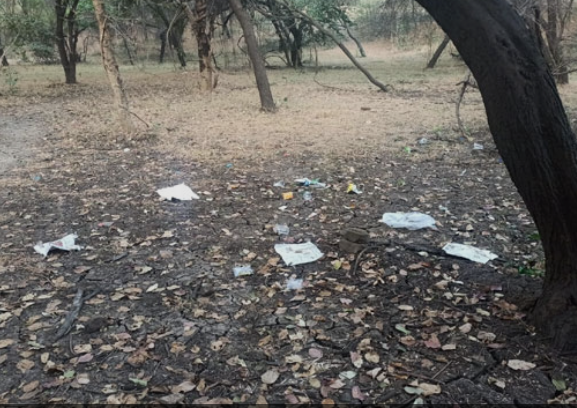
While the city of Nagpur continues to choke under a devastating heatwave with temperatures hovering near 46.4°C, a severe environmental conflict has ignited in the city’s backyard. The Nagpur Municipal Corporation (NMC) is facing intense public backlash over its decision to clear hundreds of trees in the historic Aamrai forest in Sonegaon for a sewage pipeline, alongside a separate clearance drive for the London Street project.
The Aamrai grove—one of Nagpur’s last surviving urban green lungs—is not just an ecological refuge but a living archive, featuring trees that have witnessed nearly 300 years of history dating back to the Bhonsle era.
The Cost of Urbanization: Choking the “Orange City”
Despite its famous moniker as India’s “Orange City,” Nagpur’s internal ecological metrics paint a alarming picture of urban deforrestation. The ongoing clearance drives stand in stark contrast to global urban forestry standards:
The Imminent Clearcut:
- The Sewage Pipeline Project: The NMC has ordered the immediate felling of 61 to 65 mature trees on land belonging to the Airports Authority of India (AAI) near the Sahakar Nagar Ghat and the Mulik Complex to lay a municipal sewer network.
- The London Street Project: An additional 138 trees have been marked for destruction along the high-profile commercial corridor.
- The Heritage Paradox: The target zone is home to crucial indigenous species, including Babul, Ber, Hivar, Neem, Eucalyptus, Tamarind, Banyan, Jamun, Palash, and Bel. While the NMC has technically categorized only three of these as official “heritage trees,” environmentalists note that the remaining unmarked timber stands are up to 93 years old.
Procedural Violations and Civil Resistance
The administration’s handling of the mandatory public notice period has heavily intensified local anger. In a blatant violation of standard regulatory protocol, the NMC pasted physical eviction notices onto the tree trunks before the legally mandated public objection and hearing window had even closed, signaling to locals that the bureaucratic process was a mere formality.
This high-handed approach has triggered sustained on-ground resistance. Since May 13, 2026, grassroots environmental groups and residents have launched a series of major demonstrations: